
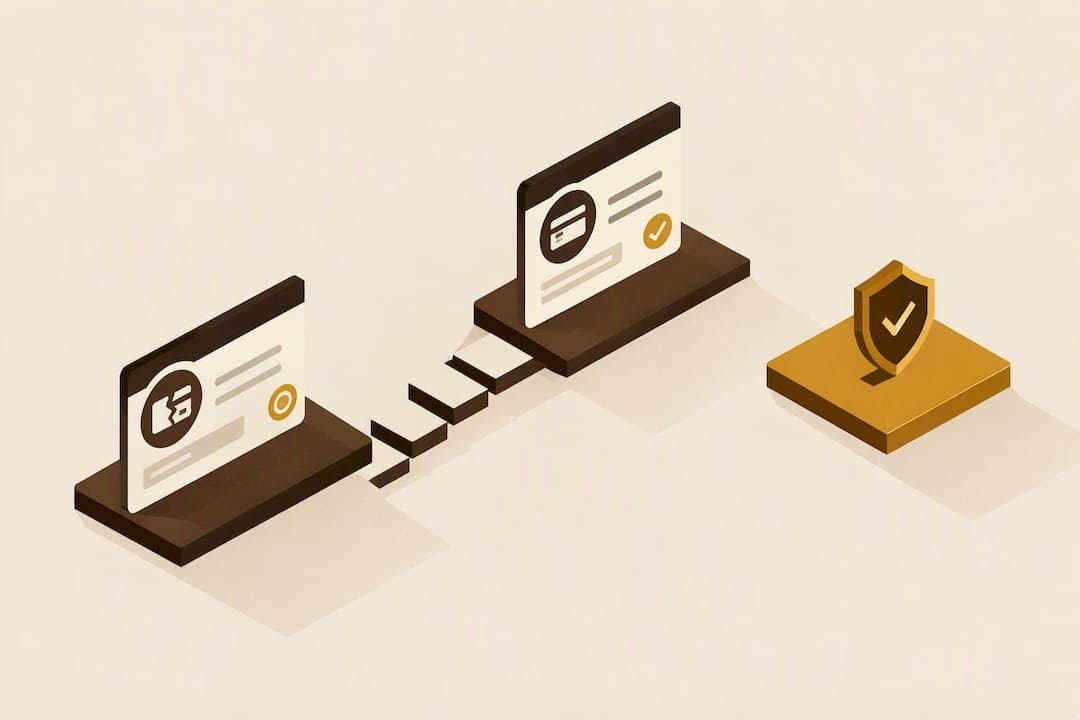
Yes, most charge-offs can be settled, and doing it right can move you closer to loan approval and a better score. The trade-off: settling usually resolves the balance but doesn't erase the charge-off itself, and forgiven debt can trigger tax consequences. Before you negotiate anything, pull your credit reports, confirm who currently owns the debt, and if a collector contacted you, send a written validation request first.
TL;DR:
- Settling a charge-off often results in a "Paid" or "Settled" status, but the original charge-off remains on your credit report for seven years.
- Negotiating a lower lump sum is most effective with debt buyers, who often purchase accounts for pennies on the dollar, allowing room for 30% to 50% offers.
- Always obtain a written settlement agreement specifying the dollar amount, payment deadline, and reporting terms before making any payment.
- Large forgiven balances can trigger tax liabilities through Form 1099-C, so consulting a tax professional before settling is advisable.
- Handling multiple charge-offs or complex ownership chains warrants professional help, and you should verify ownership, gather documentation, and avoid upfront fees.
Table of Contents
- What Are Your Charge-Off Settlement Options?
- What Should You Gather Before Negotiating a Charge-Off?
- How Do You Negotiate a Charge-Off Settlement?
- How Will Settling Affect Your Credit Report and Score?
- What Tax and Legal Risks Come With Settling a Charge-Off?
- When Should You Get Professional Help With a Charge-Off?
- Sources
- FAQ
What Are Your Charge-Off Settlement Options?
A charge-off means the original creditor gave up on collecting and wrote the debt off its books as a loss, usually after about six months of missed payments. That write-off does not erase what you owe. It just changes who might come after you next, and it opens the door to a few distinct paths forward.
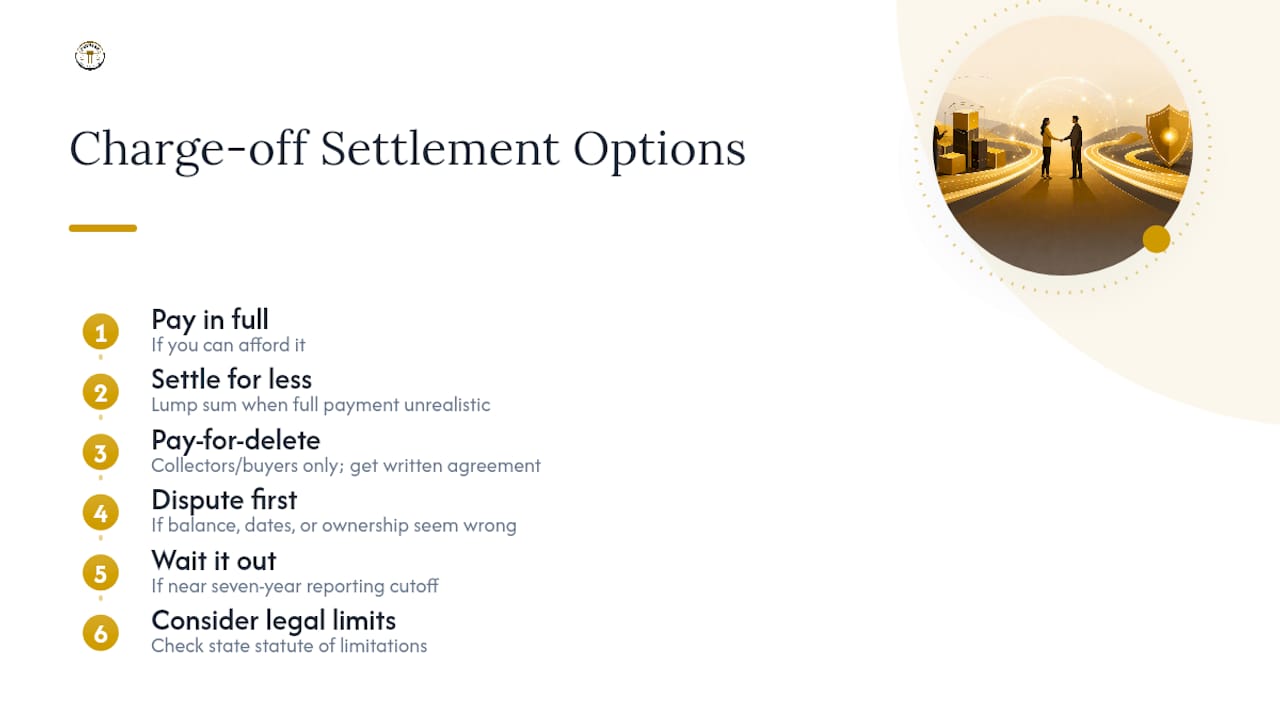
Pay in full when you can afford it and want the account marked "paid" with the least ambiguity. This is the cleanest route if cash flow allows it, though it won't remove the charge-off from your history.
Settle for less than the balance when a lump sum is realistic but full payment isn't. Charged-off accounts are often easier to negotiate down than fresh delinquencies because the creditor already absorbed the loss and just wants something back.
Pay-for-delete works only with collectors or debt buyers, almost never with original creditors, and it must be spelled out in writing before you pay a dime.
Dispute first if the balance, dates, or account ownership look wrong. Don't negotiate a debt that isn't even accurately reported.
Wait it out if the account is near its seven-year reporting cutoff or if your state's statute of limitations on collection lawsuits has nearly expired. Sometimes the smartest move is no move at all.
What Should You Gather Before Negotiating a Charge-Off?
Walking into a negotiation without documentation is how people end up paying the wrong party or accepting bad terms. Spend a weekend on this first.
- Pull your reports from Experian, TransUnion, and Equifax. Note the date of first delinquency, since that date controls when the charge-off falls off your report, not the charge-off date itself.
- Identify who currently owns the debt. Original creditor, third-party collector, or debt buyer, because your leverage and legal rights differ depending on which one you're dealing with.
- Send a written validation request if a collector reached out. You have a 30-day window under the FDCPA to demand proof the debt is accurate and that they have the right to collect it.
- Set a realistic budget and target offer range based on what you can actually pay in a lump sum or short structured plan.
- Keep a contact log and mail key letters certified, with copies of everything you send and receive.
- Decide your desired outcome before you call, whether that's settled, paid in full, or pay-for-delete, so you don't get talked into a worse deal on the phone.
Pro Tip: Never negotiate from your own bank account information over the phone. Get the settlement number and terms in writing first, then arrange payment through a method you control, like a cashier's check or a one-time ACH you initiate yourself.
For a full negotiation script and letter templates, Pioneercreditsolution's guide on how to negotiate with creditors and debt collectors walks through wording that holds up.
How Do You Negotiate a Charge-Off Settlement?
Debt buyers frequently purchase charged-off accounts for pennies on the dollar, which is exactly why you have room to negotiate. Start your offer low, commonly in the 30% to 50% range of the balance, and explain your ability to pay in plain terms.
- Open low and lead with your constraint. Something like, "I can pay $X as a one-time settlement, and I can send it this week," works better than apologizing for the debt.
- Prefer a lump sum over a payment plan. Collectors and buyers give their deepest discounts for money they can close out immediately, not for a promise spread over months.
- Expect smaller discounts from original creditors. They didn't buy the debt cheap, so be ready to offer more or ask about a structured payment plan instead.
- Demand a written settlement agreement before you pay anything. It needs the exact dollar amount, the payment deadline, and how the account will be reported to the bureaus.
- Insist on "satisfies the debt in full" language, and if a lawsuit is already filed, insist the agreement states the case will be dismissed with prejudice so it can't be refiled later.
- Never send payment until you have the signed letter in hand. Verbal promises from a collections rep mean nothing once the call ends, a point Bills makes plainly when walking through settlement mechanics.
- Keep proof of payment and check your credit reports 30 to 60 days later to confirm the update actually posted.
If you're dealing with the original creditor rather than a collector, start with the issuer's own hardship or settlement program before assuming you need to negotiate from scratch, and get any modification confirmed in writing regardless of which track you're on.
How Will Settling Affect Your Credit Report and Score?
Settling a charge-off zeroes out the balance and typically updates the status to "Paid" or "Settled." The charge-off tradeline itself, though, stays on your report for seven years from the date of first delinquency, regardless of when you settle it.
By the numbers: A settled charge-off remains visible on your credit history for the full seven-year window, but newer scoring models increasingly ignore zero-balance collection accounts, meaning your score impact can vary significantly depending on which model a lender pulls.
That inconsistency matters because plenty of lenders still use older FICO or VantageScore versions that count a settled charge-off the same as an unpaid one for scoring purposes. Give it 30 to 60 days for the update to post. If it doesn't show up, file a dispute with each bureau and attach your settlement paperwork as proof. Manual underwriters, the humans reviewing mortgage or major loan files, tend to view a resolved account far more favorably than one that's still sitting open and unpaid, even when the automated score doesn't move much.
What Tax and Legal Risks Come With Settling a Charge-Off?
Forgiveness isn't free. When a creditor cancels part of what you owe, the IRS generally treats that forgiven amount as taxable income reportable on Form 1099-C. Get ahead of it instead of getting surprised by it next tax season.
- Expect a 1099-C for larger settlements. If a creditor forgives $600 or more, they're required to report it, and you'll need to account for it on your return.
- Talk to a tax professional before settling a large balance. Certain exceptions, like insolvency, can reduce or eliminate the taxable portion, but you need documentation to claim them.
- Know your state's statute of limitations. A debt past that window is "time-barred," not forgiven, and in some states making even a partial payment can restart the clock on collection rights.
- Get dismissal language in writing if you're already being sued. Settling mid-lawsuit should always include a with-prejudice dismissal clause.
- Respond to any summons immediately. Ignoring a lawsuit almost guarantees a default judgment against you, even if you were planning to settle anyway.
- Consider an attorney before negotiating large sums if litigation is already active or threatened.
When Should You Get Professional Help With a Charge-Off?
Handling one account yourself makes sense when you've confirmed who owns the debt and you can fund a lump-sum offer without straining your budget. It's a straightforward process once you have validation paperwork in hand.
- Get help when you're juggling multiple charge-offs, especially if ownership chains are unclear or you're not sure which accounts have already been sold to a buyer.
- Avoid any debt-settlement company demanding upfront fees or promising guaranteed removals. Nonprofit credit counselors or a consumer attorney are safer for legal gray areas.
- Pioneercreditsolution has worked with over 10,000 satisfied customers navigating exactly these situations, using technology like SmartCredit to track disputes and settlements in real time.
- Pioneer Credit Solution's services extend to removing charge-offs and negative collection items, paired with client education so you understand every step rather than just handing off the problem.
- Ask any paid provider for a written scope of work, a realistic timeline, and sample settlement letters before you sign anything.
If you'd rather have professionals validate ownership and negotiate on your behalf, Pioneercreditsolution's credit repair services start with a full review of your reports before any negotiation begins. For readers specifically targeting removal strategies, the charge-off removal guide covers what's realistic and what isn't when it comes to deletion requests.
A Few Words From Danny
Verify before you negotiate, offer what you can actually pay, and get every promise in writing. If your case involves a lawsuit or a big forgiven balance, loop in a tax or legal professional before you sign anything. Pioneercreditsolution's guides on rebuilding credit after financial disaster are worth a look once the account is resolved.
— Danny
This article is general information, not a substitute for advice from a qualified financial advisor. Consult a qualified financial professional about your own circumstances before acting on anything here.
Sources
- How do I negotiate a settlement with a debt collector? | CFPB
- Can I remove old charge off on credit report? | Experian
- Is charged-off credit card debt easier to settle? | CBS News
FAQ
Will Settling a Charge-Off Remove It From My Report?
No. Settling typically changes the account status to "Paid" or "Settled," but the charge-off tradeline stays on your report for seven years from the original delinquency date.
Can I Get a Pay-for-Delete Agreement?
It's possible with collectors or debt buyers but rare with original creditors, and it only counts if it's confirmed in writing before you pay. Don't send money based on a verbal promise.
Will I Owe Taxes on a Settled Charge-Off?
Possibly. Forgiven debt of $600 or more is often reported to the IRS on Form 1099-C and treated as taxable income, so talk to a tax professional before finalizing a large settlement.
Can I Still Be Sued After a Charge-Off?
Yes. A charge-off is an accounting move by the creditor, not a legal release, and the debt can still be sold or pursued in court within your state's statute of limitations.
How Long Until a Charge-Off Falls Off My Report?
Seven years from the date of first delinquency, regardless of when it was charged off or settled. Reporting updates after a settlement usually take 30 to 60 days to appear.