

A rapid rescore is a lender-initiated service that updates your credit report in 1 to 5 business days instead of the usual 30 to 60 days, using verified corrections or paydowns you've already made. Mortgage lenders request it, credit bureaus process it, and FICO or VantageScore recalculates your file on an accelerated schedule. It's built for one specific moment: you're close to qualifying for a mortgage, or a better rate, and a documented change to your credit file could push you over the line.
TL;DR:
- Rapid rescore can only be requested by your lender through their reporting vendor and is limited to specific changes like paid collections or reduced utilization.
- It is most effective if your score is within five to twenty-five points of the qualifying threshold, not for extensive delinquencies or recent bankruptcies.
- Accurate documentation, such as payoff letters and bank statements, is crucial to avoid rejection and ensure quick processing within two to five business days.
- Fees typically range from $25 to $50 per tradeline per bureau, and a second credit pull may cause a temporary small score drop.
- Rapid rescore cannot remove accurate negative items or address new negative activity during the process, making proper timing and paperwork essential.
Table of Contents
- What Is a Rapid Rescore and Who Can Request One?
- When a Rapid Rescore Actually Moves the Needle
- Step-by-Step: Getting a Rapid Rescore Through Your Lender
- The Paperwork That Makes or Breaks Your Request
- What to Expect on Timing and Cost
- What a Rapid Rescore Can't Do for You
- What We've Seen Go Wrong in Real Rescore Requests
- Why the Conventional Advice on Rapid Rescore Falls Short
- How Pioneer Credit Solution Helps You Prepare for a Rescore
- Sources
- FAQ
What Is a Rapid Rescore and Who Can Request One?
You can't call up Equifax and ask for a rapid rescore yourself. That's the part most borrowers get wrong. This is a lender-managed service, not a consumer right under the Fair Credit Reporting Act, which means only your mortgage lender or loan officer can submit the request, and only through their credit reporting vendor.
Here's how it plays out in practice:
- Your loan officer identifies the gap. They pull your tri-merge report and spot an item that, if corrected, could raise your score enough to matter, like a maxed-out card or an old collection you already paid.
- You gather proof. Bank statements, payoff confirmations, or a letter from the creditor showing the account is settled or the balance dropped.
- The lender submits it to a credit reporting vendor. This is a third-party company that acts as the go-between for the lender and the bureaus.
- The vendor forwards it to the relevant bureau or bureaus. Equifax, Experian, and TransUnion all support rapid rescoring, but each request has to go to the specific bureau where the error or update lives.
- The bureau reprocesses your file and reruns the scoring model. The lift you get is the same lift you'd eventually get from normal reporting. Rapid rescore doesn't invent points. It just skips the wait.
The kinds of changes that qualify are narrow: paid-off collections, corrected balances, furnisher errors, or paydowns that drop your utilization ratio. Cosmetic disputes or unverified claims don't make the cut.
When a Rapid Rescore Actually Moves the Needle
Rapid rescoring works best as a scalpel, not a hammer. If you're sitting five to 25 points below a lender's cutoff for a rate tier, a well-documented rescore can quickly close that gap. If your file has multiple delinquencies, a recent bankruptcy, or years of missed payments, a two-day fix isn't going to touch it.
Situations where it's worth asking your lender about a rescore:
- You just paid off a credit card and your utilization dropped significantly, but the balance hasn't reported yet.
- A collection account was paid in full or settled, and you have the creditor's letter to prove it.
- A furnisher made an error, like reporting a closed account as still open with a balance.
- You're within striking distance of a better interest rate tier and every point counts.
Situations where it won't help:
- You have several accounts in collections or multiple 90-day-late marks across different creditors.
- You've filed for bankruptcy in the past two years and are trying to offset that with one paydown.
- The negative item is accurate and unresolved. Rapid rescore has no power over information that's still true.
Step-by-Step: Getting a Rapid Rescore Through Your Lender
You don't submit this yourself, but you drive the process. Here's the sequence that actually works.
- Ask your loan officer directly whether they offer rapid rescoring. Not every lender does, and some only use specific vendors.
- Request a simulation first. A good loan officer can run a "what if" scenario showing which specific balance or account change would move your score the most before you spend a dollar. Better's guidance on this is a smart first move rather than guessing which card to pay down.
- Make the payment or secure the correction, then document it immediately. Save receipts, confirmation emails, and payoff letters the same day.
- Hand your lender the exact paperwork they need, and confirm which bureau or bureaus the request is going to. Rescoring one bureau doesn't automatically update the others.
- Confirm the lender will re-pull your scores for underwriting once the rescore posts, so the update actually reaches your loan file.
Pro Tip: Never pay down a random card the week before closing hoping it helps. Ask for the simulation first. Sometimes the account with the highest balance isn't the one dragging your score, it's the one with the highest utilization percentage relative to its limit.
The Paperwork That Makes or Breaks Your Request
Bureaus don't take your word for it, and neither do lenders. Your documentation has to match exactly what the bureau expects, or the request stalls or gets rejected outright.
What you'll typically need:
- A zero-balance letter from the creditor, on official letterhead, confirming the account is paid off.
- Bank statements or payment confirmations showing the transaction cleared, not just that you submitted it.
- A settlement letter or paid-collection confirmation, especially if the account status is changing from "collection" to "paid."
- Account statements reflecting the new balance if you're rescoring a utilization drop rather than a payoff.
If you need a furnisher letter fast, call the creditor's customer service line directly and ask specifically for a "paid in full" or "rescore letter." Most companies have a template ready. The ones that don't respond quickly are usually the ones that end up blocking the whole request.
What to Expect on Timing and Cost
Processing typically takes two to five business days, and many lenders see results closer to the two to three day mark when documentation is clean.
By the Numbers: Rapid-rescore fees commonly run $25 to $50 per tradeline, per bureau, which means correcting three accounts across all three bureaus could add up to several hundred dollars. Lenders often absorb this cost as a routine part of underwriting, but it can occasionally show up as a line item in your closing costs, so it's worth asking directly.
One detail catches people off guard: when your lender re-pulls your score to check the rescore results, that pull can register as a hard inquiry, causing a small, temporary dip. It's almost always outweighed by the rate improvement you're chasing, but don't panic if you see a few points drop before the real gain shows up.
What a Rapid Rescore Can't Do for You
This service has a narrow job, and it's worth being blunt about its limits before you count on it.
- It cannot remove accurate negative items. Late payments, bankruptcies, and legitimate charge-offs stay on your report no matter how fast you move.
- It's not guaranteed to raise your score by any specific amount, or at all.
- Bureaus can and do reject requests when documentation doesn't match their exact format or is incomplete.
- Because rescoring is a commercial arrangement between bureaus and lender subscribers, not a right under federal law, there's no appeal process if a bureau says no.
- New negative activity can pop up during the rescore window, like a missed payment on an unrelated account, and drag your score back down before closing.
If a furnisher won't issue a corrective letter, a rescore is off the table entirely. That's when a Section 611 dispute with the bureau becomes the right tool instead, and you can run both processes in parallel on different accounts without one blocking the other.
What We've Seen Go Wrong in Real Rescore Requests
The single biggest cause of a rejected rescore isn't a bad credit history. It's mismatched paperwork. A payoff letter that lists the wrong account number, or a bank statement that doesn't clearly show which account the payment applied to, gets bounced right back.
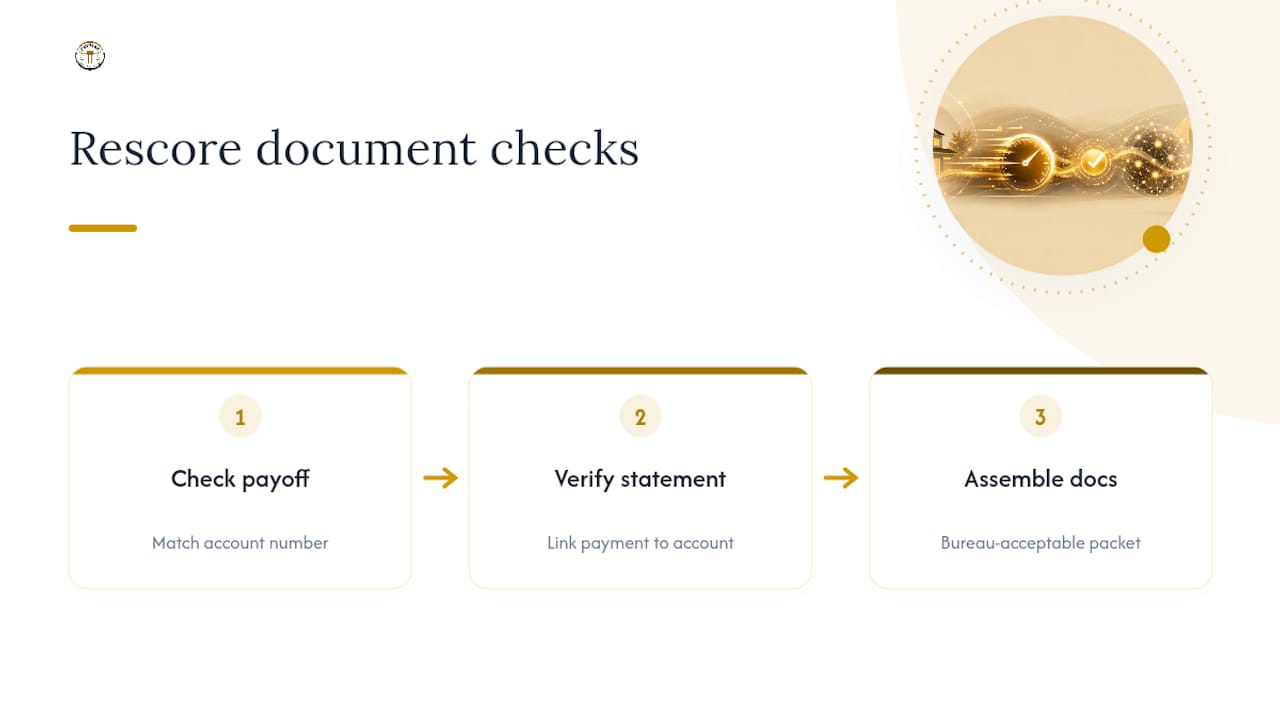
At Pioneer Credit Solution, we've built our approach around catching these mismatches before they reach a lender's desk. Our credit repair services use tools like SmartCredit to pull a clean picture of your file, flag which accounts are actually dragging your score, and help you assemble documentation that bureaus accept the first time. Many of our clients have seen increases of over 120 points through our broader credit repair work, and that same attention to detail is what separates a rescore that sails through from one that stalls for a week you don't have before closing.
Why the Conventional Advice on Rapid Rescore Falls Short
Most articles on this topic treat rapid rescore like a magic button: pay something off, wait a few days, watch your score jump. That framing sets people up for disappointment. The research is clear that rapid rescore is a delivery mechanism, not a score-boosting technique in itself. It moves information faster. It doesn't create information that wasn't already true.
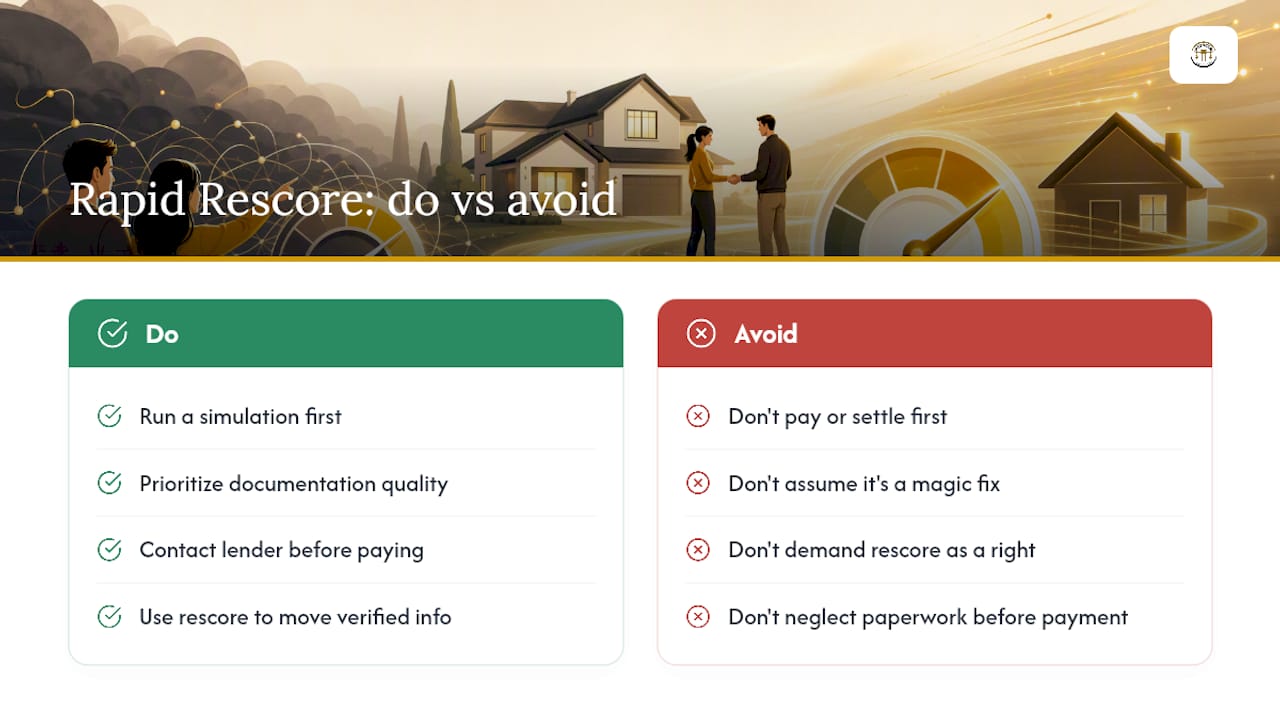
Where the standard advice really fails borrowers is in sequencing. Too many people pay down a card or settle a collection first, then ask their lender about rescoring after the fact, when the smarter move is running a simulation before spending a dollar.
The other blind spot is legal status. Rapid rescore isn't a right you can demand. It's a courtesy lenders extend through vendor relationships with the bureaus, and that means documentation quality isn't a formality, it's the entire game. If you take one thing from this article, prioritize the paperwork before you prioritize the payment.
— Danny
How Pioneer Credit Solution Helps You Prepare for a Rescore
Pioneer Credit Solution doesn't submit rescoring requests. That job belongs to your mortgage lender. What we do is make sure you show up to that conversation with a file that's already clean, documented, and ready to move.

Our credit repair services start with a full credit profile analysis using SmartCredit, so you know exactly which accounts are hurting your score and which paydowns will actually matter to a lender's rescore simulation. We help you track down zero-balance letters, organize payment confirmations, and correct furnisher errors before your loan officer ever submits a request, which cuts down the back-and-forth that kills so many rescore attempts. If you're eyeing a home purchase in the next few months, our mortgage readiness credit repair program is built specifically for borrowers trying to close the gap between where their score sits and where a lender needs it to be. Reach out for a free consultation and find out exactly what's standing between you and your next rate tier.
This article is general information, not a substitute for advice from a qualified financial advisor. Consult a qualified financial professional about your own circumstances before acting on anything here.
Sources
- What is a rapid rescore? — OneMain Financial
- How can rapid rescore help me get a mortgage? — Nolo
- What is rapid rescore? — Experian blog
- What is rapid rescore? — Capital One
- What Is a Rapid Rescore and How Does It Work? — Better
FAQ
How Long Does a Rapid Rescore Take?
Most rapid restores complete in two to five business days once your lender submits documentation, with two to three days being common when paperwork is accurate on the first try. Standard credit report updates without rescoring can take 30 to 60 days by comparison.
Can I Request a Rapid Rescore Myself?
No. Rapid rescore is a lender-managed service, and only your mortgage lender or broker can submit the request through their credit reporting vendor. If you're not currently working with a mortgage lender, a service like Pioneer Credit Solution's credit repair program can still help correct errors and build a stronger file ahead of time.
How Much Does a Rapid Rescore Cost?
Fees commonly run $25 to $50 per tradeline, per bureau, so correcting several accounts across all three bureaus can add up quickly. Lenders often cover this cost themselves, though it can occasionally appear in your closing costs.
Will a Rapid Rescore Remove Negative Items From My Report?
No. Rapid rescore only speeds up the reporting of changes that are already true, and it cannot remove accurate negative items like late payments or bankruptcies. If you're dealing with inaccurate negative items, a dispute process or a full credit repair strategy is the more appropriate tool.
Which Credit Bureaus Support Rapid Rescore?
Equifax, Experian, and TransUnion all support rapid rescoring, but a request has to go to the specific bureau where the correction needs to be reflected. Updating one bureau doesn't automatically apply the change across the other two, which is why lenders confirm bureau targeting before submitting.