
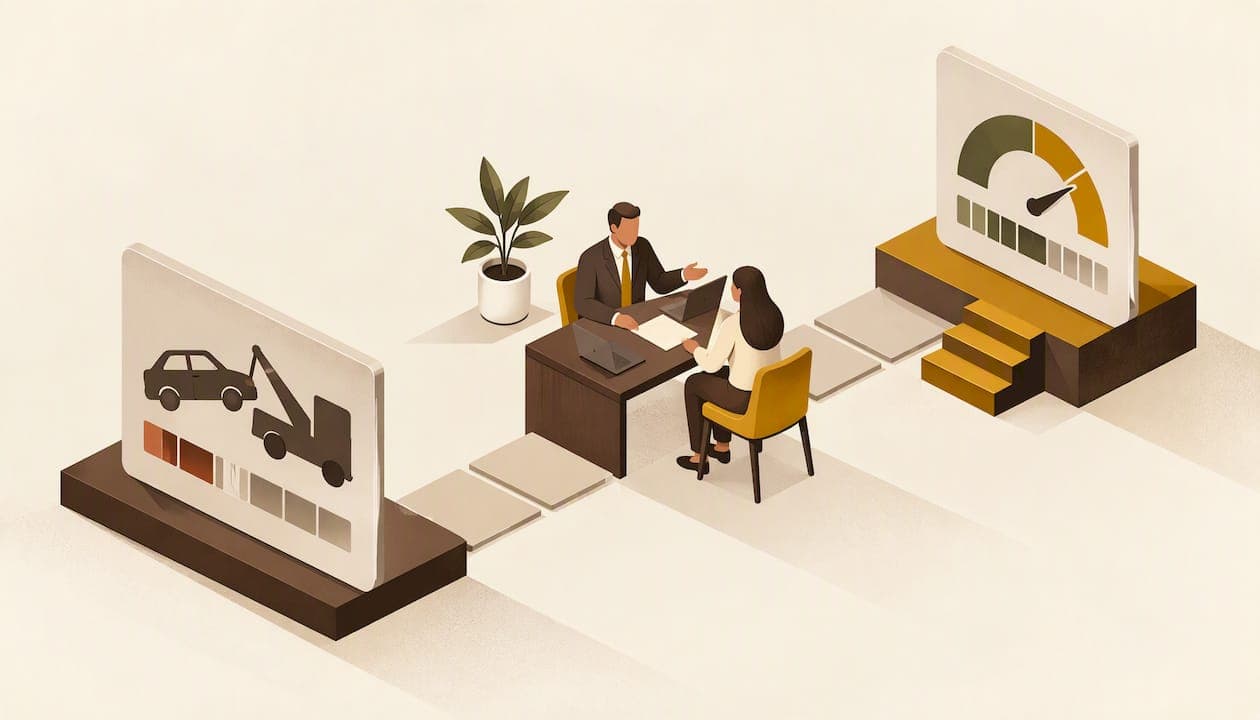
A repossession is a derogatory mark that can stay on your credit report for up to seven years, and you may still owe a deficiency balance after the lender sells your vehicle. Contact your lender, order your credit reports, and gather your payment records right away. If anything is reported wrong, you can dispute it.
TL;DR:
- A repossession can remain for up to seven years, with the reporting period starting at the first missed payment that led to default.
- Dispute incorrect dates, balances, or account status with every bureau reporting them and the lender; investigations typically take 30 to 45 days.
- Returning the vehicle voluntarily may reduce fees, but you still owe any deficiency unless the lender waives it in writing.
- If a repossession violated an existing payment arrangement, contact your state attorney general or file a complaint with the CFPB.
- Rebuild with one secured card or a loan designed to build credit, pay on time, keep balances low, and add accounts gradually.
Table of Contents
- What repossession is and how it happens
- How repossession affects your credit score and borrowing costs
- How long a repossession stays on your credit report
- How to dispute inaccurate repossession reporting and challenge wrongful repossessions
- Practical options after repossession
- Step-by-step rebuilding plan after repossession
- Impact of repossession on different types of credit
- Legal rights and protections of borrowers facing repossession
- Effect of repossession on future loan eligibility and interest rates
- How we help borrowers recover from repossession
- Credit repair and loan readiness services built for your next step
- FAQ
- Sources
What repossession is and how it happens
Repossession means a lender takes back your vehicle because you defaulted on the loan. It can happen in different ways, and the details affect your options.
- Involuntary repossession: the lienholder takes the vehicle, often by tow, without you handing it over.
- Voluntary surrender: you return the vehicle yourself. Voluntary repossession does not automatically erase the debt, and you still owe any deficiency unless the lender waives it in writing.
- Who can repossess: the current lienholder or an assignee who bought your loan. If your loan was sold, you owe that new holder, as the CFPB's auto loan answers explain.
- Practical issues: towing and storage fees, personal items left in the car, and the sale procedure all affect what you end up owing.
How repossession affects your credit score and borrowing costs
Repossession is a significant negative item, and the exact score drop depends on the scoring model and what else is in your history. Someone with a long record of clean payments will often see a different result than someone who already had late payments or high balances.
A repossession that leads to a charge-off or an unpaid deficiency makes things heavier. Lenders see higher risk, so you may face higher interest rates, larger down payment requirements, or offers limited to secured and specialty loans while you rebuild.
Reporting mistakes can deepen the damage. The CFPB says that incorrect past-due amounts or wrong default dates are a known issue after repossessions, so check every detail against your own records. Examiners also found inaccurate reporting to credit bureaus in connection with repossession cases.
A repossession can remain on your U.S. credit report for up to seven years. That window is the clock every recovery plan has to work around, and the FTC states it in its vehicle repossession guidance.

How long a repossession stays on your credit report
The FTC says a repossession, including a voluntary surrender, generally stays on your report for up to seven years. That period counts from the first missed payment that led to the default, so the record starts aging before the vehicle is even taken.
If you dispute an error, plan for a wait. Investigations typically take 30 to 45 days, and corrected reporting shows up after that.
While the item remains, it does not freeze your progress. Lenders weigh recent payment history heavily, so months of on-time payments on new accounts steadily offset the older damage. The mark fades in importance well before it disappears.
How to dispute inaccurate repossession reporting and challenge wrongful repossessions
Start by comparing what is reported against what you know happened. Federal law lets you dispute inaccurate information with both the credit bureau and the business that supplied it.
- Order your reports from the credit bureaus and check dates, balances, and account status.
- Gather proof: payment records, letters, texts, and any agreement with the lender.
- File a dispute with each bureau reporting the error and with the lender or servicer.
- Allow 30 to 45 days for the investigation, then review the updated report.
- If the repossession itself looks wrongful, contact your state attorney general or file a complaint with the CFPB.
Watch for common errors. The CFPB has found that lenders sometimes fail to refund unused portions of add-on products such as GAP insurance and service contracts after an early repossession, which can inflate the deficiency balance. Examiners have also found cases where servicers repossessed vehicles despite existing payment arrangements.
Pro Tip: Send disputes in writing and keep copies of everything, including proof of delivery.
Practical options after repossession
You have more choices than it may feel like, and each carries different consequences.
- Reinstatement or redemption: where your state allows it, you may be able to pay what is past due plus repossession expenses, or pay the full balance, to get the vehicle back. State rules vary, so check yours.
- Voluntary surrender: this can reduce some fees, but you still owe any deficiency unless the lender forgives it in writing.
- Understanding the deficiency: it is the total owed under the contract, including repossession fees, minus the vehicle's sale price. Lenders may sue to collect it.
- Negotiating a settlement: ask the lender for a settlement amount, and get any agreement in writing before you pay.
- Seeking a written waiver: if the lender offers to waive the deficiency, make sure the waiver is documented.
The FTC also advises contacting your lender as soon as hardship hits. Many will consider extensions or modifications if you reach out before a default, so the earlier you call, the more options stay open.
Step-by-step rebuilding plan after repossession
Recovery works best in stages. Do the urgent items first, then build habits that compound.
- Immediately: resolve or document the deficiency status, get every agreement in writing, enroll in credit monitoring, and review your credit reports.
- In the first few months: open a secured card or credit-builder loan and pay it on time, every time.
- Keep utilization low: use only a small share of your card limit so balances do not drag your score down.
- Add one positive account at a time: a single new tradeline with a clean record helps more than several applications at once.
- Over time: add varied positive accounts, consider refinancing once you qualify, and keep payments flawless.
Set realistic expectations. The negative item stays for its full reporting period, but consistent positive behavior lifts scores around it. Many borrowers see meaningful gains well before the seven years are up.
Pro Tip: Set up automatic payments on every account so a single missed due date never adds fresh damage.
Impact of repossession on different types of credit
A vehicle repossession lands first on your personal credit report, because the auto loan is tied to you. It affects personal loan approvals, credit card offers, and future auto financing, since lenders in each category see the same derogatory item.
Business credit works differently. Business credit files are built on a company's own payment history, so a personal auto repossession does not normally appear there. But if you are a sole proprietor, or you personally guaranteed a business loan, lenders often review your personal report too. A repossession can then shape how a bank or online lender views your application, even when your business accounts are in good standing.

If the vehicle was a business asset financed in your name, the same personal consequences apply. The practical lesson is to keep personal and business obligations clearly separated, and to build business credit on its own track. Our business credit building service exists for exactly that reason, so a personal setback does not hold back a company's growth.
Legal rights and protections of borrowers facing repossession
State law drives most repossession rules, which is why the FTC and CFPB both point borrowers to their state attorney general or local consumer protection agency. Rights such as reinstatement or redemption depend on where you live, so confirm what applies to you.
Federal protections sit alongside state ones. You can dispute inaccurate credit reporting under federal law, and you can file a complaint with the CFPB if a servicer broke the rules. The CFPB's own examinations have found wrongful repossessions despite payment arrangements, which shows these protections matter in practice.
Know the basics you can act on:
- Ask who currently holds your loan, since an assignee who buys it becomes the party you owe.
- Request an itemized accounting of fees and the sale price of the vehicle.
- Check whether unused add-on product charges were refunded.
- Keep every notice, call record, and payment receipt.
Because the specifics change by state and by contract, a qualified professional or your state attorney general's consumer page is the right place to confirm your exact rights.
Effect of repossession on future loan eligibility and interest rates
Lenders price risk, and a repossession signals risk. Expect closer scrutiny on any new application, especially for auto loans, where the lender sees the very kind of account that went wrong.
In practice, that can mean higher interest rates, a larger down payment, a shorter approved term, or a request for a co-signer. Some borrowers can only qualify for subprime financing at first, which costs more over the life of the loan. Mortgage and personal loan underwriters also review the event, though they often care most about how you have managed credit since.
Timing helps. The longer your clean record after the repossession, the more weight lenders give your recent behavior. Paying down the deficiency, keeping utilization low, and holding a steady stretch of on-time payments all improve the terms you are offered. Refinancing a higher-rate loan once your score recovers can then cut your costs.
Preparation matters too. Before applying, review your reports, fix errors, and compare offers rather than accepting the first approval. Each hard inquiry has a small effect, so apply deliberately.

How we help borrowers recover from repossession
We see the same pattern often: a borrower wants to rebuild but is unsure which errors to dispute or what a lender wants to see. Our team starts with a credit profile analysis, disputes inaccurate items, builds a score-boosting plan, and prepares you for auto loan readiness. A managed approach can move faster than going it alone, because we handle dispute follow-up, work with furnishers, and shape a lender-ready profile for you. If you want a recovery plan built around your situation, reach out for a consultation.
— Yvette V.
Credit repair and loan readiness services built for your next step

If repossession is holding back your credit, we can help you move forward. Our team handles the dispute work, the planning, and the lender preparation, so you are not sorting it out alone.
- Credit repair services: we dispute inaccurate repossession reporting and work to resolve negative items.
- Credit score boosting: a plan to raise your score with steady, on-time activity.
- Auto loan assistance: we prepare your profile so you can approach lenders with confidence.
- Personal and business loans: once your credit is ready, we can connect you to financing options.
Whether you need to correct errors, address a deficiency, or get ready for your next vehicle, these services map directly to the problems repossession creates. Request a consultation or a credit profile analysis through our Credit Repair Services page, and let us build your recovery plan.
This article is general information, not a substitute for advice from a qualified financial advisor. Consult a qualified financial professional about your own circumstances before acting on anything here.
FAQ
How bad is it if you have a repo on your credit?
A repossession is a significant negative mark that can stay on your report for up to seven years, according to the FTC. Its weight fades as you add on-time payments. It can raise your borrowing costs until then.
Can you have a 700 credit score with a repo?
It is possible, but it depends on your overall history and the scoring model. Consistent on-time payments, low balances, and a mix of accounts can lift your score even while the repossession remains on your report.
Can you still buy a house with a repo on your credit?
Often yes, though underwriters will review the event closely. Lenders tend to focus on your recent payment history, so a clean record since the repossession strengthens your case. Terms and requirements vary by lender and loan type.
Can you fight a repossession on your credit?
If the reporting is inaccurate, yes. Federal law lets you dispute it with the bureaus and the lender, and investigations typically take 30 to 45 days. If the repossession itself seems wrongful, contact your state attorney general or the CFPB.