
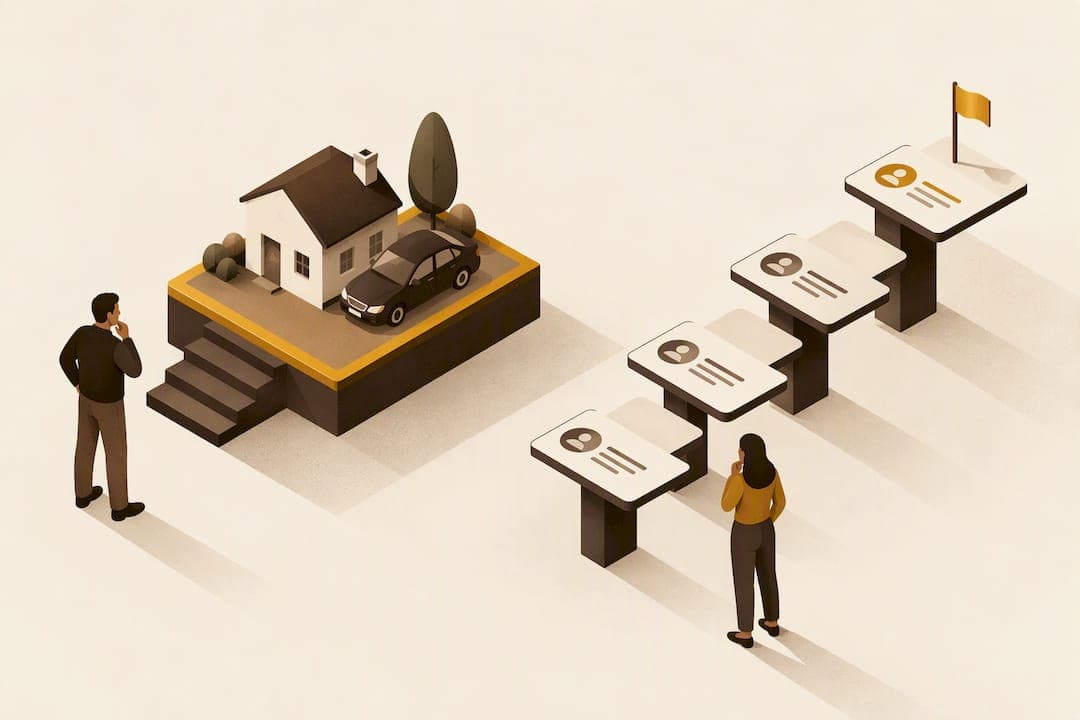
If you own a home or car you're willing to pledge, a secured loan typically gets you a lower rate and a larger amount. If you'd rather keep your assets out of the deal, an unsecured loan costs more but protects your property, according to the CFPB. Before signing anything, demand full fee disclosure in writing.
TL;DR:
- Secured loans permit borrowing larger amounts at lower rates by pledging assets like homes or cars, but default risks losing those assets through repossession or foreclosure.
- Unsecured loans rely solely on creditworthiness, typically have higher interest rates, and defaulting often results in collections, credit damage, or lawsuits without asset loss.
- Approval odds for secured loans are better with thinner credit files due to collateral, while unsecured loans favor strong credit profiles with no assets at risk.
- Comparing comprehensive loan estimates, including fees and total cost, is crucial before choosing between secured and unsecured borrowing options.
- Proper preparation, such as reviewing credit reports and understanding collateral risks, improves chances of qualifying without risking assets unmanageably.
Table of Contents
- Differences at a glance: collateral, rates, and approval odds
- What a secured loan is and the real risks behind the lower rate
- What an unsecured loan is and why lenders charge more for it
- How your choice moves approval odds, APR, and your credit score
- How to decide: a checklist before you sign anything
- Preparing to qualify without risking assets you can't afford to lose
- An editorial note on choosing between cost and risk
- How we help you prepare for the right loan
- FAQ
- Sources
Differences at a glance: collateral, rates, and approval odds
The fastest way to understand secured versus unsecured borrowing is to look at what backs the loan and what happens if payments stop. A secured loan uses property such as a home, car, or savings account as collateral, which a lender can seize if you default. An unsecured loan relies entirely on your creditworthiness, which is why it generally carries a higher interest rate.
- Collateral: secured loans require a pledged asset; unsecured loans require none.
- Rates: secured loans usually price lower because the lender has a fallback; unsecured loans price higher to offset that missing fallback.
- Approval odds: secured loans can work for thinner credit files since the collateral reduces lender risk; unsecured loans lean heavily on your score and income.
- Loan size and terms: secured loans often allow larger amounts and longer repayment windows tied to the asset's value.
- Default outcome: secured default can mean repossession or foreclosure; unsecured default typically leads to collections activity, judgments, or lawsuits rather than losing a specific asset.
- Typical uses: mortgages, auto loans, and HELOCs are secured; credit cards, personal loans, and most student loans are unsecured.
These differences shape everything from the paperwork you sign to how a missed payment plays out months later.
What a secured loan is and the real risks behind the lower rate
A secured loan ties repayment to a specific asset. The lender holds a legal claim, called a lien, against that property until the balance is paid off. Common examples include mortgages, auto loans, home equity lines of credit (HELOCs), and secured personal or business loans backed by savings, equipment, or inventory.
Lenders accept lower rates on secured debt because collateral reduces their exposure. Approval often depends on loan-to-value ratio (how much you're borrowing relative to the asset's worth), proper lien perfection, and, for many business loans, a personal guarantee that puts your own assets on the line even when the loan is technically made to the business. Regulatory guidance on credit risk review confirms that institutions document collateral and loan terms carefully precisely because repossession and foreclosure are the backstop.
That backstop is also the danger. Miss enough payments on a car loan and the lender can repossess the vehicle. Fall behind on a mortgage or HELOC and foreclosure becomes possible. Some agreements cross-collateralize, meaning one missed account can put multiple pledged assets at risk.
Before signing, ask for:
- The full APR and all fees in writing, not verbally quoted.
- Confirmation of exactly which asset secures the loan.
- Written default remedies, including notice periods before repossession or foreclosure.
A debt consolidation example shows the tradeoff: rolling credit card balances into a HELOC can lower your rate significantly, but it converts unsecured debt into a risk against your house.
Pro Tip: Ask your lender to show the loan estimate side by side with an unsecured alternative before you pledge anything.
What an unsecured loan is and why lenders charge more for it
An unsecured loan or line of credit is extended based on your credit history, income, and overall financial profile rather than any specific asset. Credit cards, signature personal loans, most federal and private student loans, and many business lines of credit fall into this category.
Because there's no collateral to recover, underwriting focuses almost entirely on creditworthiness. Lenders look closely at your credit score, debt-to-income ratio, and payment history, and they price in extra risk through a higher APR. The FTC notes that a stronger credit score generally earns lower rates and broader access, which matters more for unsecured products since there's no asset to soften a weak application.
Default on an unsecured loan doesn't trigger automatic repossession of a specific item. Instead, consequences typically include collections calls, charged-off accounts reported to credit bureaus, and in some cases a lawsuit that can lead to wage garnishment depending on your state. The damage to your credit score can be severe and long-lasting even without losing property outright.
Unsecured borrowing tends to make sense when:
- You need a smaller amount for a short-term expense and don't want to risk a major asset.
- You're protecting a home or car you already own outright.
- You qualify for a competitive rate on your credit profile alone and want to avoid lien paperwork entirely.

How your choice moves approval odds, APR, and your credit score
Lenders weigh credit score, debt-to-income ratio, and, for secured products, the value and liquidity of your collateral. A thin file with no major assets often has an easier path through a secured loan, while a strong credit profile can unlock competitive unsecured rates without pledging anything.

Total cost isn't just the headline APR. Origination fees, prepayment penalties, and the loan term all change what you actually pay over time, and comparing full loan estimates side by side is the only reliable way to see the real difference.

Secured borrowing lowers lender risk, and that often shows up as a lower advertised rate, though your own credit profile still drives the final number you're offered, according to CFPB guidance on how collateral affects loan pricing.
Credit score mechanics also differ slightly. A new account of either type can temporarily dip your score through a hard inquiry and a lower average account age, but a repossession or foreclosure on a secured loan tends to cause deeper, longer-lasting damage than a standard unsecured default because it signals a complete loss of the asset, not just a missed payment.
How to decide: a checklist before you sign anything
- List the amount you actually need and whether that amount is realistic for an unsecured product given your credit profile.
- Decide your collateral tolerance. Would losing the pledged asset be a minor setback or a financial disaster?
- Pull your credit profile so you know roughly where you stand before applying.
- Set a monthly budget ceiling and compare it against estimated payments at the APR you're likely to qualify for.
- Ask every lender for a full APR breakdown, including origination, prepayment, and late fees, in writing.
- Confirm lien details on secured offers: what's pledged, how perfection works, and whether a personal guarantee applies.
- Watch for red flags: vague fee language, guaranteed score-fix promises, or pressure to pay upfront for credit repair services, which the FTC flagged in a 2026 enforcement action involving nearly $200 million in consumer losses.
- Collect multiple written offers before committing, and compare total cost, not just the monthly payment.
Pro Tip: If you're denied for an unsecured loan, ask the lender exactly which factor drove the decision before assuming a secured loan is your only option.
Preparing to qualify without risking assets you can't afford to lose
Strengthening your file before you apply often changes which loan type is even on the table. Start with the basics:
- Pull your credit reports and check them for errors.
- Dispute inaccuracies that are dragging your score down.
- Lower revolving utilization where you can.
- Set up autopay so payment history stops working against you.
- Gather income and asset documentation lenders will ask for anyway.
A small secured credit card can also rebuild thin or damaged credit over time, since on-time payments get reported just like any other account. If you bring in outside help, a legitimate provider should explain exactly what it can and can't do and should never promise a guaranteed score jump—a line the FTC draws clearly in its scam-prevention guidance. Always demand full fee disclosure before paying anything.
An editorial note on choosing between cost and risk
The lowest rate isn't automatically the right answer. A secured loan can save you real money, but only if you're honest about what happens if your income drops for a few months. We see too many borrowers focus on the rate and skip the "what if" conversation entirely. We approach credit repair and loan matching cautiously, aiming to improve options and preferring clients to be fully informed before signing anything.
— Danny
How we help you prepare for the right loan
We built our services around the gap between knowing your options and actually qualifying for them. Our credit repair services work through inaccurate items on your report so your file reflects your real payment history, and our team can also walk you through personal loan options once your profile is ready.
A consult starts with a plain-language look at your credit file and an honest read on whether secured or unsecured borrowing fits your situation better right now. We'll never promise a guaranteed score jump, and we'll always put fees in writing before you commit. Get your free consultation to see where you stand.
This article is general information, not a substitute for advice from a qualified financial advisor. Consult a qualified financial professional about your own circumstances before acting on anything here.
FAQ
What is the difference between a secured and an unsecured loan?
A secured loan is backed by collateral such as a home or car that the lender can seize if you default, while an unsecured loan relies on your credit and income with no specific asset pledged. Secured loans tend to carry lower rates; unsecured loans typically cost more because the lender takes on more risk, according to the CFPB.
Do unsecured loans hurt credit?
Opening any new loan, secured or unsecured, can cause a small, temporary dip from the credit check and a lower average account age. Missed payments or default on an unsecured loan can lead to collections and serious score damage, though it generally doesn't trigger automatic loss of a specific asset the way secured default can.
Are secured loans bad for credit?
Secured loans aren't inherently bad for credit and can actually help build a thin file when payments are made on time. The real risk isn't to your score directly, it's to the pledged asset: falling behind can mean repossession or foreclosure, which then damages your credit significantly.
What is the difference between unsecured and secured personal loans?
A secured personal loan requires collateral, often savings or another asset, and usually comes with a lower rate and potentially a larger amount. An unsecured personal loan skips the collateral requirement entirely but leans more heavily on your credit score and income to set the rate and loan amount.
Sources
- CFPB glossary / consumer education
- FTC press release on 2026 credit-repair enforcement
- Interagency guidance on credit risk review systems (FDIC)