
Yes, a startup can build business credit, and you can start today. Stabilize your personal credit first, separate your business identity with an EIN and dedicated bank account, then open one to three tradelines that actually report to the bureaus. If you haven't registered an EIN or opened a business checking account yet, do that this week. Everything else follows from there.
TL;DR:
- Building a business credit file requires matching legal, address, and contact details across all accounts and registrations to avoid delays.
- Starting with an EIN, a dedicated business bank account, and reporting tradelines helps establish credibility quickly within 30 to 90 days.
- Most startup financing options, like secured cards and online lines of credit, depend on stage-specific criteria, including time in business and revenue.
- Confirm which bureaus vendors report to before relying on their tradelines, as not all vendors report, which can hinder credit progress.
- Regularly monitor and dispute errors on business credit reports, ensuring all expenses are paid through business accounts to prevent file inconsistencies.
Table of Contents
- Building Startup Business Credit: The Foundational Steps
- Startup Financing Options: What You Can Realistically Access
- How to Apply for Startup Business Credit and What to Expect
- Monitoring Your Business Credit and Fixing Errors Fast
- What I've Learned Watching Startups Build Credit From Scratch
- Let Pioneer Credit Solution Build Your Business Credit File the Right Way
- Sources
- FAQ
Building Startup Business Credit: The Foundational Steps
Lenders and vendors need a paper trail before they extend real terms, and that trail starts with consistency. Every piece of your business identity, from your legal name to your address to your phone number, has to match across every application, registration, and account you open. Mismatched details are one of the quietest reasons a business credit file stays thin for months.
Here's the order that actually works:
- Choose your legal structure and get an EIN. An LLC or corporation, paired with an Employer Identification Number from the IRS, separates you from your business in the eyes of lenders and bureaus.
- Lock in consistent business identity details. Use the same legal name, address, phone number, and NAICS/SIC code everywhere you register.
- Open a business checking account under your legal entity, and use a matching business email and domain instead of a personal Gmail address.
- Register for a D-U-N-S number through Dun & Bradstreet, which the Small Business Administration points to as a foundational step for building a business credit file that lenders can actually see.
- Open vendor accounts or credit-builder products that report. Net-30 vendor terms, secured business cards, or dedicated credit-builder programs are the fastest path to a reporting tradeline.
- Confirm reporting before you rely on it. Not every vendor reports to a bureau, even ones that advertise "Net terms." Call and ask which bureau they report to and how often, before you assume that on-time payment is doing anything for your file.
That last step trips up more founders than any other mistake on this list. A business credit builder card that reports monthly can create a tradeline inside 30 days, but a handshake vendor account that never reports does anything for your PAYDEX score no matter how promptly you pay.
Pro Tip: Call your top three vendors this week and ask one question: "Which bureau do you report payment history to, and how often?" If they can't answer clearly, don't count on that account to build your file.
For founders whose personal credit is still shaky, Pioneer Credit Solution's guidance on securing financing with bad personal credit walks through how underwriters weigh that history in the early going.
Startup Financing Options: What You Can Realistically Access
Your financing options expand in stages, and matching your ask to your stage saves you from wasted applications and hard credit pulls that don't convert.
- Business credit cards and secured cards are the earliest realistic tradeline. A secured card uses your own deposit as the limit, which removes most of the underwriting risk and gets you approved even with a thin file.
- Online startup lines of credit typically require three to twelve months in business, a minimum revenue threshold, and a personal credit score in the 600s or higher, according to NerdWallet's review of startup lines of credit. Online lenders move faster than banks but usually charge more for the privilege.
- SBA CAPLines become realistic once you have a more established operating history and documentation. They're backed by the Small Business Administration, which also notes that new-business loan eligibility often hinges heavily on the owner's personal credit until the business file matures.
- Cloud and platform credits aren't credit products, but they stretch your runway without adding debt. AWS Activate offers tiered credits up to $200,000 depending on funding stage and provider affiliation, Cloudflare for Startups offers tiers from $10,000 up to $350,000, and the Google for Startups Cloud Program provides infrastructure support and credits for qualifying companies.
The real decision is speed versus cost. Online lenders and secured cards get you capital or a tradeline fast, but at a higher rate or a locked deposit. Bank and SBA products cost less over time but demand documentation and history you may not have yet. Most founders end up using both: a fast-reporting tradeline now, and a bank relationship later once the file has weight behind it. If you want help sorting through nationwide business lines of credit at this stage, that's exactly the gap those products are built to fill.
How to Apply for Startup Business Credit and What to Expect
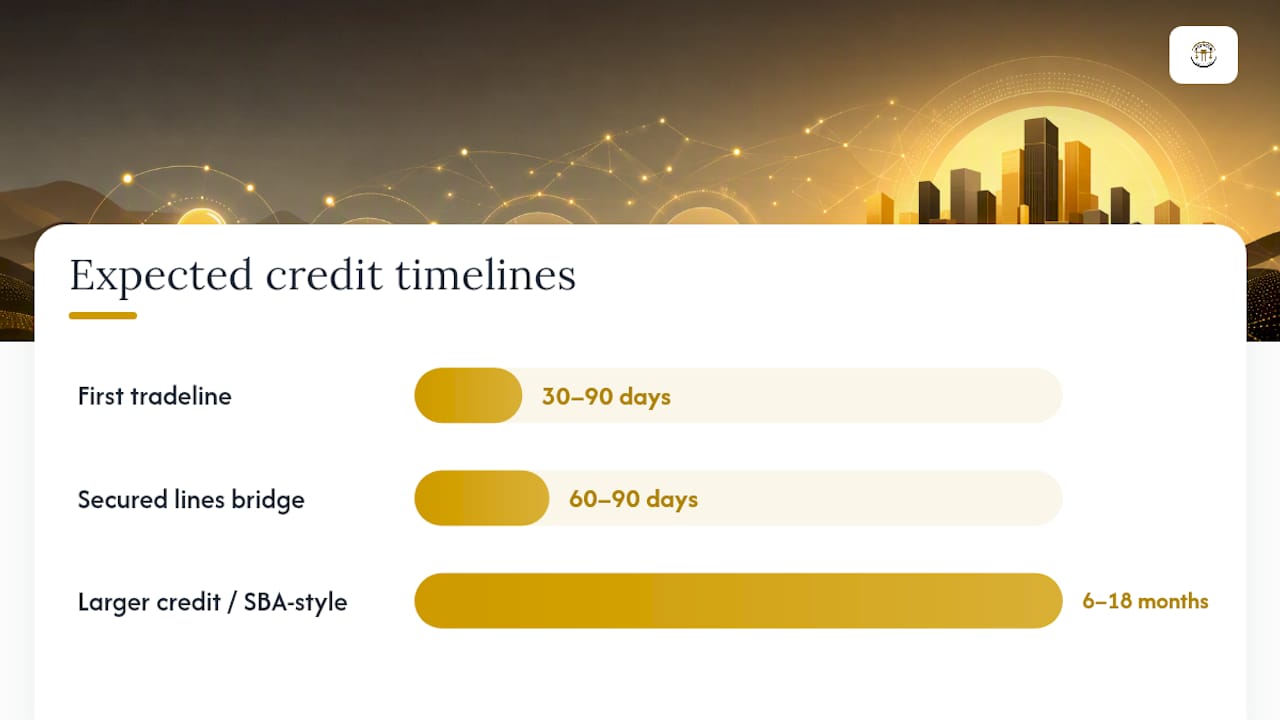
Timelines matter here more than most founders expect. You'll typically see your first tradeline appear on a business report within 30 to 90 days of opening an account that reports. Access to larger lines of credit or SBA-style financing usually takes 6 to 18 months of consistent payment history and revenue.
Before you apply anywhere, prepare these:
- Bank statements, usually the last three to six months, showing consistent business cash flow.
- Revenue projections or actuals, especially if you're applying for anything beyond a secured card.
- Your EIN and incorporation documents, confirming your legal structure and business identity.
- A DUNS number and any existing business credit history, even if it's thin.
Lenders run through a fairly predictable checklist: personal credit score, revenue, time in business, and whether a DUNS or PAYDEX profile exists at all. Analysts who evaluate lender risk models, like those covering due-diligence practices for lenders, consistently point to documentation completeness as one of the biggest factors separating a fast approval from a stalled one.
While you wait for that history to build, cash-secured lines and secured cards aren't just backup plans. They're the bridge that gives you 60 to 90 days of usable credit while your file matures underneath it.
Monitoring Your Business Credit and Fixing Errors Fast
Pull your personal report from AnnualCreditReport, the only site authorized by the FTC to provide it for free. Business reports live elsewhere: Experian, Equifax, and Dun & Bradstreet each maintain separate business files, and none of them automatically sync with each other.
- Check your business report for tradelines that don't belong to you, duplicate files under slightly different business names, or vendor accounts that never actually reported.
- Document everything before disputing: account numbers, dates, and any correspondence with the vendor or lender in question.
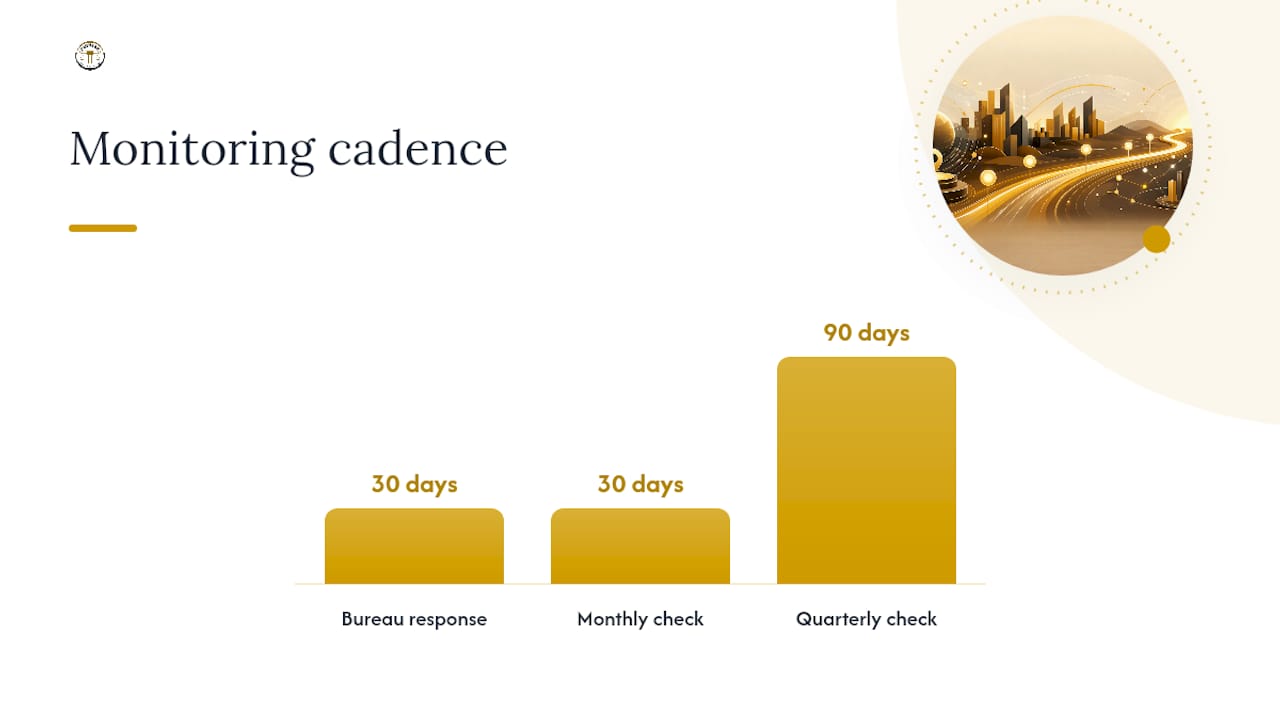
- Submit disputes directly through each bureau's business dispute process, and expect a response window of roughly 30 days.
- Set a monthly reminder to check both personal and business reports, and confirm every quarter that your reporting vendors are still reporting.
Pro Tip: Keep every business expense on the business account, even the small ones. A single personal charge run through a business card is a common reason files get flagged as inconsistent during underwriting.
Pioneer Credit Solution's breakdown of the three major credit bureaus is a useful reference if you're trying to understand why your Experian and Equifax files don't always match.
What I've Learned Watching Startups Build Credit From Scratch
Most founders treat business credit like a formality, something to handle after the "real" work of building the product or landing customers. That's backwards. The businesses that get funded fastest are the ones that treated their credit file as a product feature from day one, not an afterthought bolted on when they needed a loan.
The mistake I see most often isn't a lack of effort. It's founders opening the wrong tradelines and assuming activity equals progress. A vendor account that doesn't report is worthless for your file no matter how loyal you are to that vendor. Specialist services use tools like SmartCredit to identify which accounts are actually building a profile and which are dead weight.
Hire a specialist when disputes get complicated, when a loan deadline is closing in, or when your personal credit is dragging down every application. DIY works fine for the basics. It stops working the moment time or complexity turns against you.
— Danny
Let Pioneer Credit Solution Build Your Business Credit File the Right Way
Building a reportable business credit file while also running a startup is a lot to juggle, and most founders don't have months to spend testing which vendors report and which don't. Some services offer business credit building designed specifically for early-stage companies, backed by approaches using tools like SmartCredit to help clients see improvement in their credit profiles.

A free consultation starts with a review of your personal and business credit standing, then maps out exactly which tradelines, vendor accounts, or credit-builder products will move your file fastest given your specific stage and revenue. If your personal credit needs work before a lender will even look at your business, that gets addressed in the same conversation. Ready to see where your file stands? Visit the business credit building page to schedule your consultation and get a clear plan instead of another month of trial and error.
This article is general information, not a substitute for advice from a qualified financial advisor. Consult a qualified financial professional about your own circumstances before acting on anything here.
Sources
- Plan your business - Small Business Administration
- Best startup business lines of credit - NerdWallet
- AWS Activate Credits
- Cloudflare for Startups
FAQ
How Long Does It Take to Build Startup Business Credit?
Expect your first reporting tradeline to appear within 30 to 90 days, with access to larger credit lines or SBA-style financing typically taking 6 to 18 months of consistent history.
Do I Need an EIN Before I Can Build Business Credit?
Yes. An EIN, paired with a matching legal business name and a dedicated business bank account, is the foundation every bureau and lender checks first.
Does My Personal Credit Score Affect My Startup's Funding Chances?
It does, especially early on. The Small Business Administration notes that new-business loan eligibility is often based heavily on the owner's personal credit until the business file matures.
What's the Fastest Way to Get a Tradeline That Reports?
Open a secured business credit card or a vendor account you've confirmed reports to Dun & Bradstreet, Experian, or Equifax. Some specialist services can help identify which specific accounts actually report before you apply.
Are Cloud Credits Like AWS Activate the Same as Business Credit?
No. Programs like AWS Activate and Cloudflare for Startups reduce your infrastructure costs and extend runway, but they don't appear on any credit bureau report.