
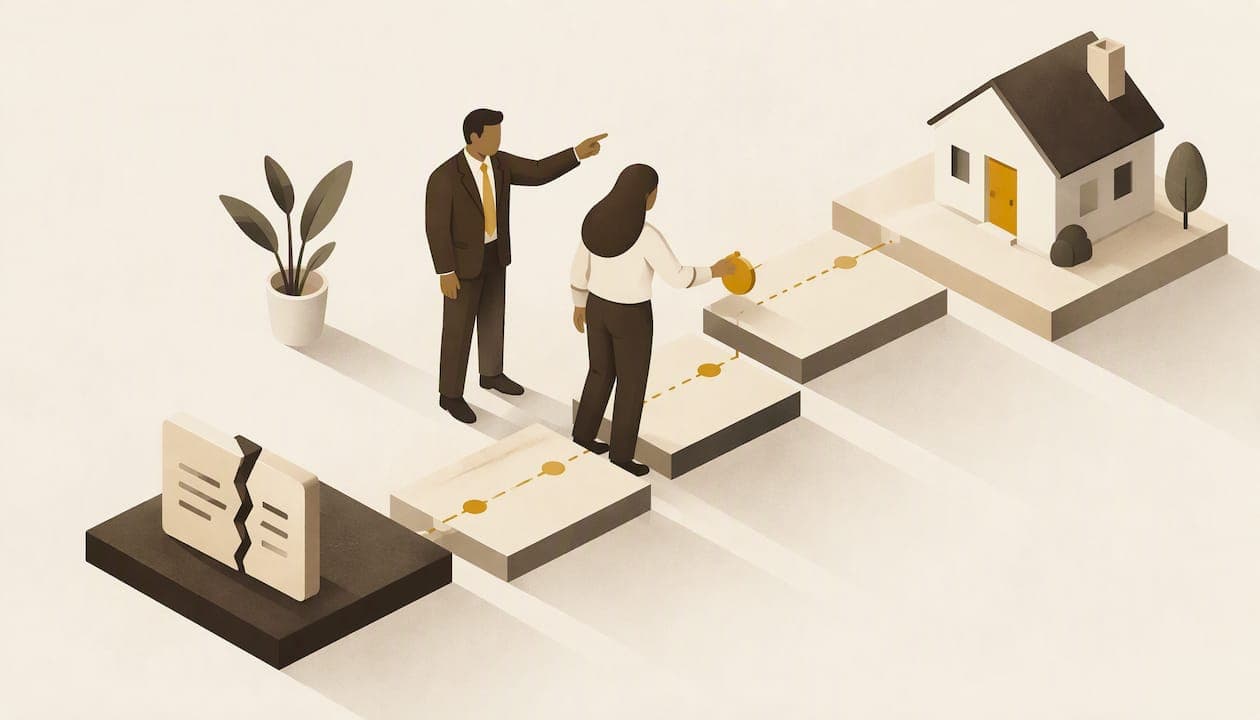
Yes, you can get a mortgage after bankruptcy. The wait depends on two things: which chapter you filed and which loan program you choose. FHA and VA loans have the shortest clocks, about two years after a Chapter 7 discharge. Conventional loans backed by Fannie Mae usually ask for four. Whatever the program, lenders also want proof that you have rebuilt your credit since the filing.
This guide walks through each waiting period, what underwriters look for once the clock runs out, and how to use the time between now and then so you are ready on day one.
TL;DR
- FHA: generally two years after a Chapter 7 discharge. For Chapter 13, you may qualify after one year of the payout period, with on-time payments and written court permission.
- VA: typically two years after Chapter 7 and one year into Chapter 13, if you have re-established satisfactory credit.
- Conventional (Fannie Mae): four years for Chapter 7, reducible to two with documented extenuating circumstances. Chapter 13 is two years from discharge or four from dismissal.
- The calendar is not enough. Underwriters want a clean payment history on new accounts, rent or utilities since the filing.
- Start now. Check all three credit reports, dispute errors and build new positive history while you wait.
Table of Contents
- How bankruptcy changes the mortgage timeline
- Waiting periods by loan type
- Waiting is not enough: re-establishing credit
- What to do while the clock runs
- Our perspective: the timeline is the easy part
- Want a clear plan before you apply?
- Choosing a credit repair company: protect yourself
- A realistic example
- Mistakes that delay approval
- FAQ
- Sources
How bankruptcy changes the mortgage timeline
Lenders treat a bankruptcy as a significant derogatory credit event. Fannie Mae's guide says such events dramatically increase the likelihood of future default, which is why every major program sets a minimum waiting period before it will approve a new loan.
Three variables decide your timeline:
- The chapter. Chapter 7 liquidates eligible assets and wipes out qualifying debts, usually within months. Chapter 13 sets up a three-to-five-year repayment plan. Programs measure each differently.
- The date they count from. Discharge, dismissal or the payout period. A dismissed case is often treated more strictly than a discharged one.
- The loan program. FHA, VA and conventional loans each publish their own rules.
The waiting period is a minimum. It is not a promise of approval.
Waiting periods by loan type
The table summarizes the rules from the agencies' own guidance. Individual lenders can add stricter requirements, called overlays, so always confirm with the lender you plan to use.
| Loan program | After Chapter 7 | After Chapter 13 |
|---|---|---|
| FHA | Generally 2 years from discharge | After 1 year of the payout period, with on-time payments and court permission |
| VA | Typically 2 years | Typically 1 year |
| Fannie Mae conventional | 4 years from discharge or dismissal; 2 with extenuating circumstances | 2 years from discharge; 4 from dismissal |
FHA loans after Chapter 7 or Chapter 13
FHA loans are the most common route for buyers with a recent bankruptcy, because the credit expectations are more flexible. Under the FHA handbook, a borrower may qualify after a Chapter 7 discharge once at least two years have passed. For Chapter 13, a borrower may be eligible after at least one year of the payout period if every required payment was made on time and the bankruptcy court gave written permission to take on the new mortgage.
The same handbook describes exceptions for an "economic event," meaning a loss of income of 20% or more. If your bankruptcy followed a layoff, a reduction in hours or a major medical crisis, ask a lender whether that exception could apply to you.
VA loans for service members and veterans
If you have eligible military service, a VA-backed loan is often worth pricing first. The Department of Veterans Affairs says the typical waiting period is two years after a Chapter 7 discharge and one year after a Chapter 13 filing, as long as you have re-established satisfactory credit. You will still need to meet a lender's own credit and income standards.
Conventional loans
Conventional mortgages sold to Fannie Mae carry the longest waits. The Selling Guide sets four years for Chapter 7, reducible to two when you document extenuating circumstances outside your control, such as a serious illness or sudden income loss. For Chapter 13, the wait is two years from discharge or four years from dismissal.

The upside of waiting is often a better rate and no FHA mortgage insurance premium, so a buyer who is not in a hurry can compare both paths.
Waiting is not enough: re-establishing credit
This is where many applicants get surprised. Even after the required time has passed, you must show that you have rebuilt. Fannie Mae's borrower eligibility fact sheet states that borrowers must demonstrate re-established credit following a significant derogatory event. The VA's own materials make the same point: underwriters look at whether you have rebuilt a clean payment history on new accounts, utilities or rent.
In practice, a lender wants to see:
- Rent, utilities and phone paid on time every month since discharge
- At least a couple of open accounts in good standing, such as a secured card and a small installment loan
- Low balances on revolving accounts
- No new collections, charge-offs or late payments after the filing
- A stable work history and verifiable income
A bankruptcy discharge does not erase every account from your report. Some items, such as a debt you chose to reaffirm or a collection filed after your case closed, can keep reporting. Our guide to rebuilding credit after bankruptcy covers the sequence we recommend.

What to do while the clock runs
You do not have to sit still. Waiting periods are a minimum, and the work you do now decides how smoothly underwriting goes later.
1. Pull all three credit reports
The Consumer Financial Protection Bureau says the first step before buying a home is to check your credit reports and scores. You can get free reports from Equifax, Experian and TransUnion once every 12 months through AnnualCreditReport.com, the same site where you can dispute inaccuracies.
After a bankruptcy, look for these problems:
- Accounts included in the bankruptcy that still show a balance owed
- Accounts that still show as past due after discharge
- Duplicate entries, or the same debt listed by both an original creditor and a collector
- Incorrect filing dates, which can make your waiting period look longer than it is
2. Dispute what is wrong, and only what is wrong
Federal guidance is clear that only time, effort and a personal debt repayment plan can improve accurate negative information. Errors, though, you have the right to have corrected. The goal is an accurate report, not a scrubbed one. A legitimate bankruptcy stays on your report for its full reporting period, and any company promising otherwise is a red flag.
3. Build new positive history
A secured credit card used for one small recurring bill and paid in full each month is the simplest starting point. After six to twelve months of clean history, many people add an auto loan or a credit-builder account. Keep card balances low relative to the limit.
4. Deal with collections before you apply
New collections after your discharge can stall an application. FHA has specific rules on how lenders treat them, which we explain in FHA's $2,000 rule for collections.
5. Know the score you need
Minimum scores vary by program and lender. Our breakdown of the mortgage credit score requirements shows how to plan around them, and once you are in contract, a rapid rescore can reflect a recent correction in days rather than weeks.
Our perspective: the timeline is the easy part
Most people who come to us after a bankruptcy ask the same question: "When can I buy?" The agency calendar answers only half of it. The other half is whether your credit file tells a convincing story on the day you apply.
Here is what we see. A borrower reaches the two-year mark and assumes the door is open. Then underwriting finds a collection that reported after discharge, a late payment on a new card or a balance from an included account that never updated. None of these is fatal, but each one costs weeks or sends a buyer back to square one.

Our approach follows the full path from recovery to growth. We start with a credit profile analysis, challenge inaccurate or unverifiable items, and then help you add the positive accounts lenders want to see. When you are ready, we help you prepare for a home purchase and connect you with lending options. We do not promise a score or a removal of accurate information. We do promise a clear plan and a report you can stand behind.
If you are not sure which program fits, start with the one whose clock ends first and build toward it. You can always compare against a longer-term conventional option once your file is stronger.
— Yvette V.
Want a clear plan before you apply?
Our team can review your reports, flag what needs fixing and map out the steps to mortgage readiness. Learn how our credit repair services work, or explore our financing options when you are ready to move toward a loan. Get your free consultation and find out where you stand.
Choosing a credit repair company: protect yourself
Be careful about who you hire. Under the Credit Repair Organizations Act, it is illegal for a credit repair company to charge you up front before services are performed. The FTC has also pursued firms that promised drastic, immediate score gains to people hoping for better mortgage rates.
Use this checklist:
- No payment before the work is done
- A written contract that spells out services, cost and your cancellation rights
- No guarantee of a specific score or of deleting accurate negative items
- Plain answers about what you can do yourself for free
If you are still in the early stage of bankruptcy, a nonprofit credit counselor can also help. Debtors must complete credit counseling and a debtor education course as part of the process.
A realistic example
This is an illustration, not a client story. Say a buyer receives a Chapter 7 discharge in March. She spends the first month pulling reports and finds a charged-off card still showing a balance. She disputes it, opens a secured card, pays rent and utilities on time, and adds a small credit-builder loan at month six.
At the two-year mark she applies for an FHA loan. Her file shows 24 months of on-time payments, low card balances and no new collections. That is the profile of a borrower who has re-established credit, and it gives an underwriter far less to question than a file with the same discharge date and no activity.
Mistakes that delay approval
- Applying the day the waiting period ends. Give yourself a few months of clean history first.
- Opening several new accounts at once. It lowers your average account age and adds inquiries.
- Shopping lenders over months. The CFPB notes that mortgage inquiries made within a short window, roughly 45 days, are generally treated as a single event in scoring, so compare offers in a tight period.
- Ignoring the Chapter 13 trustee. If you are still in a repayment plan, you need court permission before taking on a mortgage. Talk to your bankruptcy attorney first.
- Assuming one lender's no is every lender's no. Overlays differ. A different lender or program may approve the same file.
FAQ
Can I get an FHA loan after Chapter 7 bankruptcy?
Yes. FHA guidelines generally allow a mortgage once at least two years have passed since your Chapter 7 discharge. You will still need to show re-established credit and meet the lender's income and score requirements. Exceptions may apply if your bankruptcy followed a documented economic event.
Can I get a mortgage while still in Chapter 13?
Sometimes. FHA may approve a borrower after one year of the payout period if all payments were on time and the court gave written permission. VA guidance is similar, with a one-year benchmark. Talk to your bankruptcy attorney and trustee before you apply.
How long do I have to wait for a conventional mortgage?
Under Fannie Mae's guidelines, it is four years after a Chapter 7 discharge or dismissal, or two years with documented extenuating circumstances. After Chapter 13, it is two years from discharge or four years from dismissal.
Does bankruptcy automatically take my house?
No. As long as a case is carefully planned, you can often file for relief without losing your home, but the outcome depends on your equity, your state's exemptions and whether you keep up your payments. A bankruptcy attorney can tell you how your situation is treated.
Sources
- Fannie Mae Selling Guide: Significant Derogatory Credit Events
- Fannie Mae Borrower Eligibility Fact Sheet
- HUD FHA Single Family Housing Policy Handbook 4000.1
- U.S. Department of Veterans Affairs: home loan myths
- VA home loans guidance
- CFPB: Buying a home? The first step is to check your credit
- AnnualCreditReport.com: Inaccuracies in reporting
- FTC: Credit repair company settles charges (2008)
- FTC: Credit repair operation settles, illegal up-front fees (2009)
- FTC: Credit repair company settles piggybacking charges (2020)
- U.S. Trustee Program: Credit Counseling and Debtor Education